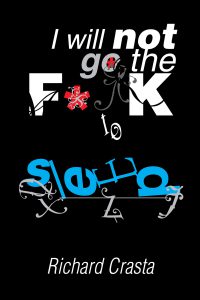
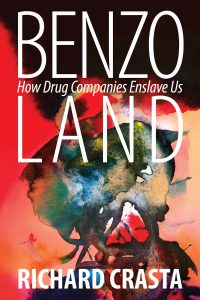
Sometimes, I am stumped by one of the most common questions people asked of a stranger when they first meet: Where is your home?
Sometimes, I laugh and say, “The Earth.” Or: “My father’s home.” Or: “Nowhere in particular.” Because I own not a square inch of land, inland or outland, triangular or quadrilateral.
Or, when I am in the mood, I say, “My home is my writing—risky, sometimes risqué, and nearly always uncensored. If you’ve ever felt like a misfit in a world of duplicates, you’ve found your tribe.”
If you don’t smile at these, my books might be too dangerous for you.
Indeed, I belonged to a privileged Indian administrative cadre called the I.A.S. or the Indian Administrative Service. It was said that it was a tough job to land but, once you had made it through to the final selection, it was even harder to be fired from it.
But once I made it through two years of training and two years of work, I realized my true calling wasn't to be an administrator; it was to be a witness. I chose the 'trenches' of New York and the freedom to start from zero as a 'Simple Simon Daddy-o'. And I realized that I had traded a promise of worldly power for the passion for free expression, establishing the fact that human beings are not just mass-produced duplicates, but individuals with their own unique secrets.
And when the “Ayatollahs” of mainstream publishing 'Ayatollahs' of mainstream publishing tried to edit my soul—asking me to trim my characters or to tone down my truth so as to reach a larger audience— I said, 'No'. I chose the 'Invisible Man Press' over compromise, ensuring that my voice, and my father’s legacy of surviving the unimaginable, would never be censored again.
Once, in my early teens and pre-teens, I had thought of myself as having a mission, perhaps even as a missionary priest, though not necessarily one who was inclined to take up the horizontal missionary position. If I had a mission, it would be to give joy to the joyless, laughter to the undertickled, and love to the loveless. I believe a world with more laughter is a world with less hatred. My work is a form of satyagraha—a protest on behalf of the truth. It is messy, imperfect, and unpolished, but it is mine. As a writer, it has been my mission, my motto, to say: Do not compromise. Just tell your story.
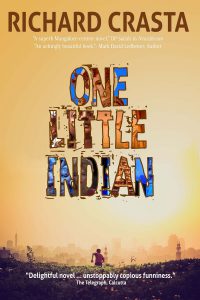
My first novel consisted of 120,000 words designed to make you burst into laughter while reading in a crowded train compartment, bringing you the startled attention of strangers. Almost anyone with reasonable intelligence could do the job of an IAS officer, but this work—telling the story of Vijay Prabhu, and his discoveries about life, love, family, religion, politics, and literature—if I didn’t do it, no one else would.
That spirit of freedom has informed all of my subsequent books, some of which are near completion. I can’t wait to have you read them, so I hope this happens soon. Meanwhile, your support is much appreciated: to be an independent writer and publisher is hugely difficult in this day and age of Open AI and programmed writing.
"And every day, at a certain time and without so much as a 'Hello, everybody, it's turd time!'—the servant girl, Yelloo, would carry the commode across the house... leaving behind an absurdly elongated cloud of foul vapours that hung in the air for the next hour or so, reinforcing the message that Yelloo had neglected to announce."
No AI program—no Chat-GPT—could have come out with that sentence.
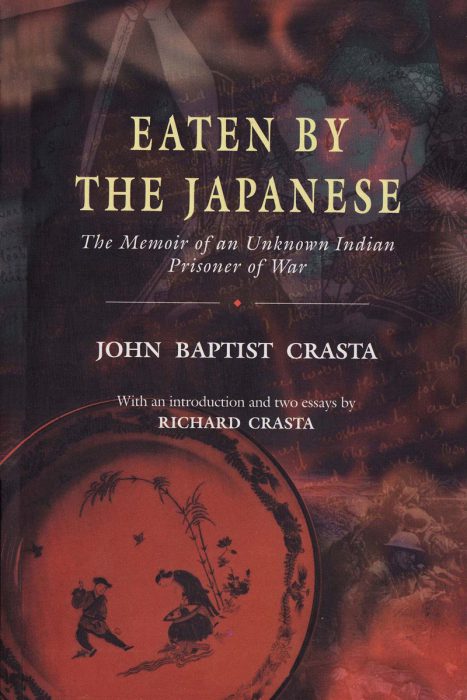
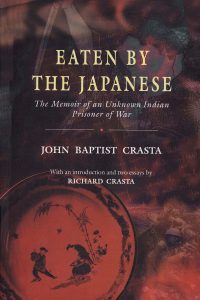
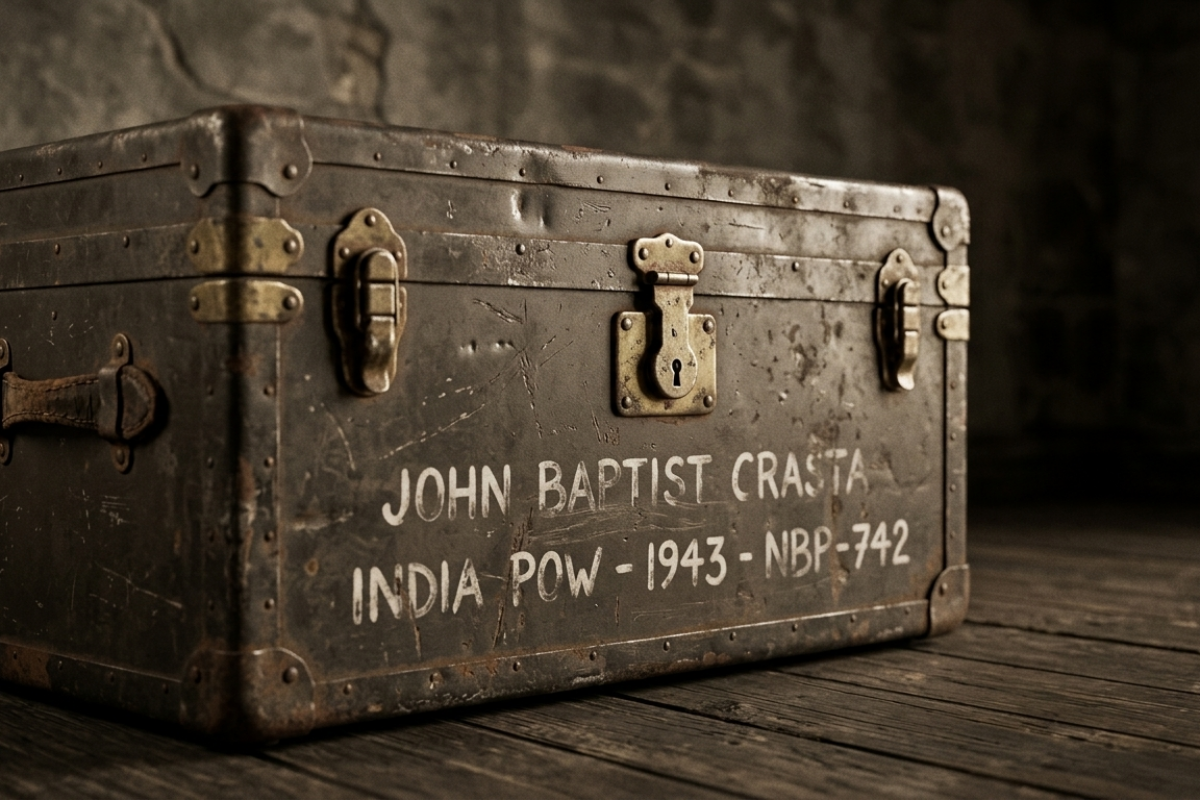
For five decades, a manuscript lay hidden in my father’s rusting steel trunk—a tale of unmitigated horror and quiet rectitude. John Baptist Crasta was an 'Unknown Indian Prisoner of War,' one of the few who survived the 'torture ships' of the Japanese.
I realized that his invisibility was part of a larger silence. By bringing his words to the light, I was performing a 'Satyagraha' against the forgetting of history. This is the soul behind the satire.
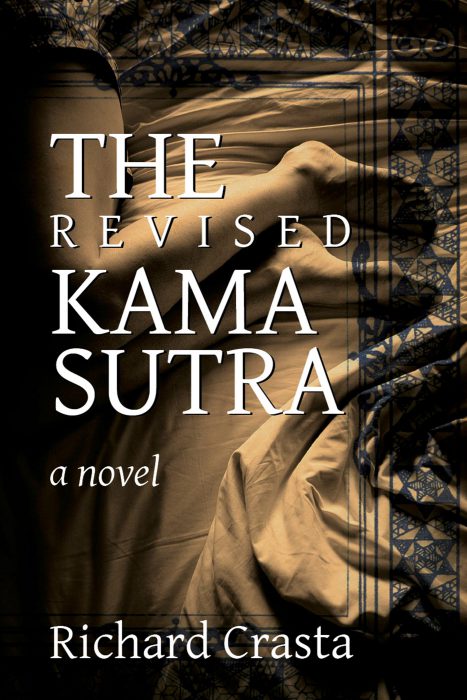
Above all, “The Revised Kama Sutra” is a novel of joyful laughter and recognition at the human experiment, seen without blinders or self-censorship. As one woman reader from New York put it:
“Any book that can force me, against my will, to guffaw out loud while reading it in public places is to be treasured. “The Revised Kama Sutra” was as rife with inventive comic imagery as “A Confederacy of Dunces,” as insightful and subtly searing as “Catcher in the Rye,” and as sensuous as the Kama Sutra itself. Although I’ve never been to India, I felt I experienced the lively streets, people, colors, aromas, shapes and sounds of the cities mentioned in the book right along with the author. It’s a cliche to say, “you’ll laugh, you’ll cry!,” but that truly is the case with this book–I recommend it, you’ll savor each page.–“A Customer”
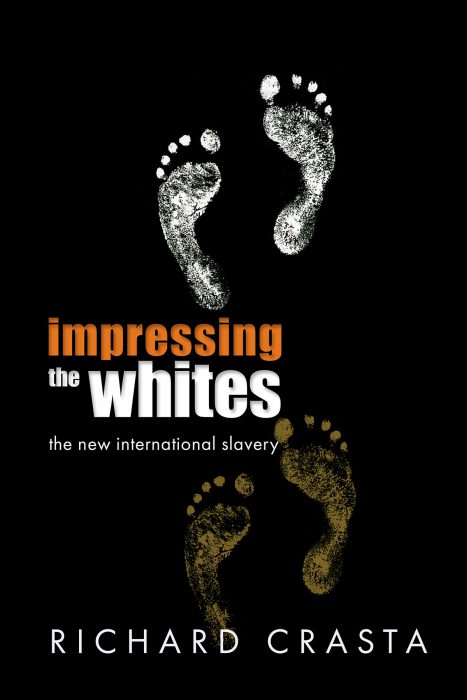
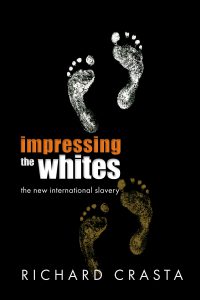
A sensation and brief Indian bestseller, Impressing the Whites has resonated with both nonwhite and white readers for its part-comic Fourteen Commandments of Indian and Nonwhite Male Success, Booker Prize tips, and soulful analysis of ethnic shame, spiritual colonialism, and how to answer your son when he asks you if he is black. This latest edition also discusses Barack Obama and the White Tiger.
Eaten by the Japanese is the only surviving World War II memoir by an Indian Prisoner of War of the Japanese among the thousands of Indian soldiers in the British Indian Army who were shipped by their Japanese captors in “torture ships” to New Britain (now part of Papua New Guinea) and Palau, and how only a fraction of them, including the author, survived.
Richard Crasta is the author of the bestselling and widely published novel The Revised Kama
Sutra, and more than fourteen other books.
He is also the father of three sons, who were all born while he was still writing his first novel: an immensely productive phase, for him.
He now lives part of the time in Southeast Asia, mainly in Cambodia, and he also spends some time in the U.S. every year or two. He is working on many other books, which he wishes to present to the world before he says goodbye to it.
The Revised Kama Sutra could be the story of your life . . . Its approach to sex is warm, sensitive and very, very funny.
Indefatigable good humor transcends the personal to stand for the contradictions of India as a whole. Considerable charm.
[Eaten by the Japanese is] a tale of unmitigated horror. A handsome tribute to a man of courage and rectitude.
I salute you as a full-fledged colleague. Yes, I am reading you and finding you very funny!
Absolutely spectacular . . .a hilarious novel, full of wit and glib language, with a whole lot of compassion thrown in.
I’m delighted to hear from my readers or anyone with an interest in my writings. You can drop me an email by filling in the form below.
I will reply as soon as possible.